Tag Archives: Delaware Casinos

General Assembly Post-Game Wrap-Up/Pre-Game Show: Tues., June 24, 2014

Looks like the Proud Know-Nothings will be the biggest winners during the 147th General Assembly. The losers? People who drive Delaware’s roads and people whose jobs depend on making sure those roads and bridges are safe. In other words: You. Another winner: The owners of the racinos who have mismanaged their Own Private Monopoly. I really didn’t think this would happen, and, I must admit, I’m almost stunned that the General Assembly would choose political expediency over our deteriorating infrastructure.

No, the Governor is not exempt from criticism. Far from it. This governor (a) waited until an election year to play a game of chicken on infrastructure spending; (b) likened the need to continue our ongoing periodic road maintenance program to swallowing bitter medicine rather than pointing out the benefits to our state’s economy from having those great construction jobs; and (c) decided to (pardon the expression) muddy the waters by making this a two-fer with a proposed clean water initiative. Horrible messaging, horrible staff work.

Still, I never expected the Delaware General Assembly, by dint of deliberate inaction, to blow (at least) a $70 million hole in the annual transportation capital budget. $70 million less spent on keeping our roads and bridges drivable in FY 15 than was spent in FY 14. (Well, maybe $60 mill, should the Honorables hike weekend tolls on Rt. 1.)  This is blatant dereliction of duty. From the ridiculous (Valerie Longhurst proclaiming that she simply won’t allow a gas tax increase) to the equally-ridiculous (Greengrocer Hocker claiming that, since the D’s can’t pass this by themselves,  he’s not going to ‘help’ them). Never mind everybody who drives in this state who will suffer the consequences. I’ve been around a long time. This Profile in Cowardice ranks near the top of the most cynical gestures ever to emerge from Dover. When the roads become pockmarked, you know who to blame. Call them on it. And if you live in one of these idiots’ districts, and you have the chance, vote against them.

While ignoring public safety, the Honorables appear poised to provide another $10 million to help bail out the bad business decisions made by greedy racino millionaires who were literally given licenses to steal by the State. Who could possibly argue that our legislative luminaries have their priorities in order? Looks like we’re headed towards a horrible conclusion to what has generally been a good legislative session.

Here’s last Thursday’s Session Activity Report. While Rep. Kowalko’s legislator-to-lobbyist ban passed the Senate, Sen. Blevins passed an amendment weakening the bill by changing the effective date from 2015 to 2017.  In other words, those ‘Honorables’ who depart the Hallowed Halls this November can become lobbyists right away. Effectively cutting losers and retirees a nice financial break. That part of the bill is bad public policy.

Legislation completely reforming the Medical Examiner’s Office passed the Senate.  This may be a first: Two no votes, Bonini and Peterson. I wonder if there had ever been a vote when these two political opposites cast the lone no votes. OK, I’ve stopped wondering. Because now I know.  And, as usual Karen Peterson raises a substantive issue: Under the bill, the new Medical Examiner’s Office would be under the Department of…Public Safety and Homeland Security. That’s right. The same Department in charge of the State Police would now oversee all of the forensic testing. What could possibly go wrong? House Speaker and former state cop Pete Schwartzkopf dismisses the potential conflict-of-interest:

“It’s had absolutely no oversight,” Schwartzkopf said. “We have a guy in control who wasn’t overseeing anything except for trying to make more money for himself. These cops risk their lives doing undercover, making buys from really badass people only to have it screwed up by a bunch of clowns up there who should be in jail.”

And some cops plant or steal evidence and otherwise influence the direction of cases as well. They no longer have to fear, of they ever had, independent oversight. And, I’m sorry, but Gov. Markell’s defense is weakweakweak:

“I have great respect for Secretary [Lewis] Schiliro,” Markell said of his Homeland Security secretary, who has pushed the move. “I trust his judgment.”

As if Schiliro will be Secretary forever. And as if this should provide any reason for confidence. Does anyone really think that any secretary would go after cops under the Department’s purview? And does anyone really think that this lab would adopt the uncovering of police planting or stealing evidence as one of its principal missions?

Oh, and lest anyone think that an agency investigating its own is immune from partiality, let’s look at the FBI, whose lab work has been praised by proponents of this bill:

“It should be no surprise that when law enforcement agencies investigate themselves, they find no wrongdoing — especially since a study of the FBI’s internal investigations found that they cleared themselves of wrongdoing in 150 out of 150 fatal shootings. With that track record, the public can’t be confident in the integrity of an investigation with this predictable outcome,” said Howard Simon, executive director of the ACLU of Florida.

Look, I understand the need for a bill and the desire to pass it swiftly. There were disastrous problems uncovered at the Medical Examiner’s Office, and right now there’s a void. But there really needs to be some independence of the office from the state cops. Otherwise, there will be even less reason to trust the impartiality of justice as meted out in this state. The bill can still be amended to provide some independence from the state police. It should be.

Today’s Senate Agenda  kicks off with the Budget Bill.  Did anybody do their weekend homework by reading the Epilog Language? Me neither. But you should. There’s almost always sneaky stuff buried there. BTW, there’s a Senate Finance Committee meeting today where the committee will consider a 1% annual pensioners’ increase. I’m a pensioner. I’m a ‘yes’ on this bill.

Andria Bennett’s ‘revenge porn’ bill leads off the House Agenda.

Legislation providing more revenue sources for voluntary ambulance services will be considered. In a vacuum, per usual.

An updated midwifery bill is on the Agenda. It should pass, but probably won’t.

Buncha Sunset bills on the House Agenda as well.

The bill reforming forensic medicine and the medical examiner’s office is on the fast track, and on today’s House Agenda. After a committee meeting earlier in the day. Kids, get to know these initials: MTSR. It means “Motion to Suspend Rules”, meaning a bill can bypass committee consideration and can be considered regardless of what would ordinarily be permitted under a Chamber’s rules. This often happens during the last week of session, where there are rules, but the rules can easily be broken. Sometimes, bad stuff sneaks through. Might even happen today. Be vigilant.
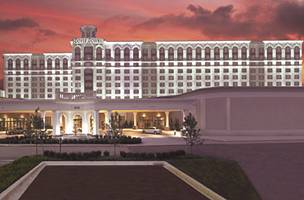
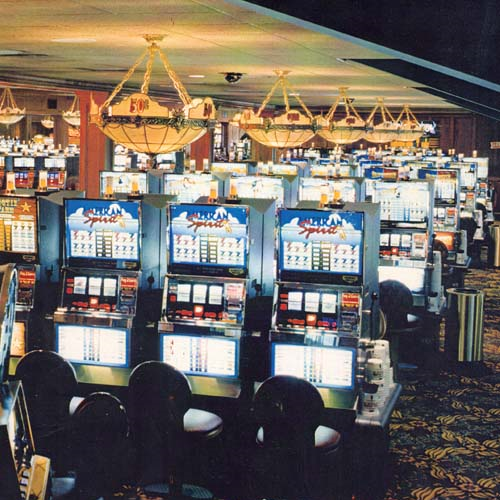
The Lottery and Gaming Study Commission = The Fix Is In to Bail Out Casinos

This study commission — created when the GA and the Governor decided to help improve the balance sheets of our local casinos who are being hurt by rising costs (who isn’t, really?) and by a failed competitive stance in a market where we are surrounded by a glut of gaming options. This Commission met for the first time on Tuesday — and tell me if you can spot why I think the fix is in:

The nine-person commission consists of legislators from both sides of the aisle, a member from the Delaware State Chamber of Commerce, Delaware’s Secretary of Finance Tom Cook, and Alan Levin, director of the Delaware Economic Development Office.

“Our goal has got to be to be able to ensure that we can give the casinos the right tools to stay competitive in this environment,” said Secretary Cook, chairman of the commission.

OK, that was too easy, but Why Oh Why are *we* giving “casinos the right tools to stay competitive in this environment”? Not one of these people runs a casino or has any casino expertise. But if you look closely at this group, they do have the expertise to ensure that an industry that can’t figure out how to make enough money for its shareholders can get there using your tax dollars. And there’s more:

The purpose of the commission is to discuss the marketplace both in-state and out-of-state, as well as various marketing efforts and the revenue distribution to video lottery, sports lottery, table games and internet gaming.

“If we were just to sit on our hands and not do anything, there would be a number of people in the state’s economy that would be affected,” Secretary Cook said.

You don’t have to sit on your hands — just get out of the way. Let a few other venues open up in more geographically competitive areas in the state and let the market sort it out. This is also way easier than living through this group of Study Commissioners going through the motions of studying in order to pronounce the pre-ordained solution of giving casinos more money. But when the fix is in, the fix is in. Senator Bushweller weighed in on this in today’s NJ — via Delaware Voice column (no link as of this writing) — making the argument that the revenue share on casinos was raised as part of a larger scale effort to triage the State’s budget during the crash. He claims that all of the drastic revenue raisers have been largely restored, noting that:

We restored the 2.5 percent employee pay cut and then, in addition to that, gave the employ­ees two raises totaling 3 percent.

Is this true?

In any event, Bushweller wants to make the case that since the state has largely normalized the cuts and revenue raisers, it should do so now for the casinos. Because 1500 jobs depend on it. He forgets to make the case that having the state protect a monopoly has some value, and taxpayers should get that value.

He does ignore that those 1500 jobs depend *more* on their employers being able to compete in a market that they had more than adequate time to accommodate. How will these casinos benefit if/when internet gaming comes on line? There’s alot of questions about this, and it seems that we should know what the financial deal is here before rushing to throw more money at casinos. But protecting jobs in an industry whose client base has been reduced (but not completely gone) doesn’t make any sense. Because if revenues don’t support these jobs now, they won’t be there for very long in the future — no matter how much state money is on the table.

There are plenty of problems in the State of Delaware that could use some focused attention. How about making sure that public schools work? We’ve spent a good deal of time making sure that charters have carved out a privileged space to operate in, how about spending time on those schools where the rest of Delaware’s children go to? Or how about some focused attention on making sure that the Port of Wilmington has what it needs to keep its clients AND can accommodate future expansion? Both public schools and the Port have the advantage of being public assets, so State oversight, planning and management adjustments is well within their own purview. But here we are — getting ready to throw money at an industry that isn’t going to operate at previous peaks.

Zombie Casino Alert! Part IV (Studying Our Failures Episode)

The end of this legislative session finds Delaware taxpayers footing an $8M bill to help the local casinos pay the increased costs of their equipment providers who are apparently paid with a percentage of the casino’s profits. Casinos now pay those vendors 6% of the profits for equipment and machines and expect to pay 10% after these contracts are re-upped. In addition, Epilogue language provided for a new Lottery and Gaming Study Commission

to study the viability of the First State’s gambling industry, including the taxes the racinos pay the state to operate.

Think about that for a minute. We are “studying” the taxes the racinos pay, we are sending them $8M to cover their increased costs, we didn’t get a no layoffs promise in return for that money. This after we spent money on a study commissioned by the DE Sports and Video Lottery Commission to take a look at the competitive field if we added two more casinos, and then promptly rejected the conclusions of that study — which recommended adding two new venues. The Governor and the GA knew then (2010) that the casinos were facing serious challenges. And we knew that they were dead wrong then, and now that all of these new venues in PA and MD have come on line (and come online like gangbusters), the threat is suddenly here.

As the DE Sports and Video Lottery Commission signaled back in 2010, they won’t be concerned with the long-term viability and competitiveness of this industry — but they will be invested in making sure that the current crop of owners get paid. So as you look at this going forward, we are specifically looking at your government protecting the interests of a very few people. I’m amused to recall that in the aftermath of the Kinder Morgan leaving the state that the Governor accused the people who opposed this deal as not knowing much about business. Because a business that didn’t have the chance at taxpayer monies making their balance sheets whole, would have been investing in where they could be competitive and cutting the strings on those venues that had no long term viability.

Instead of working on better competition, the Governor and the GA are working out a path to decrease the taxes they earn from these operations. Notice that it is a given that the vendors whose take goes from 6% to 10% won’t be giving back anything. Layoffs from casinos are not off of the table. The state taking less money — and still not being able to give their own workers a raise — is the only solution that seems to be on the table.

These casinos have a much bigger problem than state taxes. They’re customer base has been eroded due to other venues in PA and MD, and I can’t figure out what they’ve done to try to cultivate a different customer base (much less energize their old customer base), but I can tell that they’ve spent alot of time persuading the Governor and the GA that they are Too Big to Fail. Maybe everyone is trying to stay in a holding pattern until Internet Gambling comes on line. Is online gambling a savior? I don’t know. But if they are waiting for that, they should condition any cut in taxes with an expectation that taxes go right back up when this comes online.

Zombie Casino Alert
Zombie Casino Alert, Part II
Zombie Casino Alert, Part III

General Assembly Post-Game Wrap-Up/Pre-Game Show: Thurs., May 16, 2013

Your last legislative fix for almost three weeks, so savor it!

In a Dog Bites Man story, Sen. Colin Bonini sided with the oil polluters,  casting the only ‘no’ vote against legislation eliminating a monetary cap on company liability for damages caused by an oil spill. Bloviator Bonini has suffered a precipitous decline in ink this session, having ceded his senatorial Hot Air Hegemony to Monsignor Greg Lavelle. I, for one, feel sorry for the disheartened former champion, and intend to do everything within my power to rehabilitate his diminished stature (I’m speaking figuratively, of course).  The Comedic Gods demand it.

Probably the biggest news of the day is what didn’t happen:

1. Bill adding 2 more casinos doesn’t make it out of committee. Nobody has clean hands in this game. Just read today’s News-Journal article about it. Which I can’t link. Because even though we still buy the dead trees edition, the online access is screwed up, and I’m still limited to only 5 articles a month. Except the month doesn’t begin and end at the beginning and ending of the month. Hate to say it, but this enterprise has earned obsolescence, alienating the few of us who still believe in newspapers. But, I digress. Williams claims to have the support of Governor Markell, but the Executive branch provides weasel words instead (I’m typing this word for word from today’s print edition):

“The Governor always looks forward to discussing proposals with the sponsors and supporters to understand how proposals might add to the state’s revenue and economy.”

Which raises this question: Rep. Dennis E. Williams, overly-optimistic or delusional? For better or for worse, I don’t think this bill is going anywhere.

2. Bail Reform Constitutional Amendment doesn’t make it out of committee. And for good reason, IMHO. The bill would add additional serious felonies (other than capital offenses) to the list of crimes for which bail could be denied. It would also permit other felonies to be added to the list, prompting Senate Executive Committee chair Patti Blevins to state (again typed verbatim from the News-Journal story that I can’t link):

“This is extremely serious stuff,” Blevins said, adding that without specific details in the amendment, a future Legislature could add another crime to the list ‘in three days’.

Yes, it is serious stuff. Senator Blevins has protected basic civil liberties by slowing down this demagogic-driven freight train. Beau would do well to pull back, way back, on this one.

3. Rethug Plan To Waste $$’s on ‘School Security’ fails to clear committee. Rethugs won’t get the chance to piss away $5 mill in education funding on school security grants unless the House Education Committee changes its mind. HB 34(D. Short) should now be consigned to the dustbin of ill-conceived ideas. In fairness, four D House members co-sponsored the bill: Atkins, Brady, Mitchell and Potter. (BTW, did you know that Potter’s son has resigned from his nepotistically-created ‘job’ with Wilmington Mayor Dennis P. Williams to ‘seek other opportunities’? Now you do.)

Here’s what did happen. SS1/SB28(Peterson), which would allow state pensioners to work as legislative per diem employees, unanimously passed the Senate. The House did not work an agenda yesterday.

Today’s House Agenda features legislation permitting ‘same day voter registration’. HB 105(Viola) ‘provides for election day registration for presidential primary, primary, special, and general elections whereas currently the deadline is the fourth Saturday prior to the date of the election. Moreover, same day registration at polling places will be permitted with submission of valid government issued identification or other generally accepted proof of identification.’ No doubt, Rethugs will vote against it en masse, citing their fictional allegations of voter fraud. As opposed to the REAL Rethug voter fraud of suppressing votes all over the country. “B-b-but ACORN…”  Bastards.

HB 89 permits ‘the construction and operation within the State of Delaware of freestanding inpatient rehabilitation hospitals, which generally are capable of providing services to victims of stroke, spinal cord injuries, amputation or other traumas.’  This should be an interesting vote. We will see the degree to which existing medical operations (*cough Christiana Care cough*) oppose this new facility. Time for Wayne Smith to earn his lucre.

SB 51(Sokola), which purports to ‘strengthen teacher preparation by raising the standards for entry into the teaching profession’, and which has been vilified by several commenters here at DL, is also on the House Agenda.

Forgot to ask my pharmacist wife what she thinks of SB 73(Hall-Long), which ‘authorizes a licensed pharmacist, pharmacist intern or pharmacy student under the supervision of a pharmacist to dispense hypodermic syringes or needles without a prescription to individuals who are at least 18 years of age’. If this is sorta a pharmacy addendum to clean needle exchange, then I’m sure she would support it. Whaddayathink? This bill is on today’s Senate Agenda.

The other bill of note on the Senate side is SB 55(Townsend), which ‘adds members of the Public Service Commission to the definition of ‘public officer’ which would subject them, like many other individuals in positions of public trust, to certain financial disclosure requirements’. I just wish that the General Assembly would also require PSC members to recuse themselves from approving rate increase requests from companies in which they hold shares of stock. Or…prohibit members of the PSC from holding stock in companies that routinely come before them. But, at least, SB 55 will clue us in to which members are doing their masters’ bidding and improving the performance of their stock portfolios at the same time.

This legislative run of slightly over a month has proven to be one of the most productive and, from a progressive perspective, one of the best sessions I can recall. Marriage equality, gun control, some notable and historical triumphs. There are times when we (and I) disparage the legislators for their apparent disinterest. This is not one of those times. Thank you, legislators, and enjoy your well-earned break.

As will I.

Zombie Casino Alert! Part III (or the New Legislative Session Episode)

This morning’s NJ has a great piece of reporting from Chad Livengood and Doug Denison, detailing the current state of Delaware’s casino industry as well as the current positions a number of our politicians have staked out on how to best support this industry.

What is really useful about this piece is that it provides a good look at how competitive the gambling business now is as well as a look at the current state of revenues from gambling here:

Taxes and licensing fees collected from casinos and the state lottery are Delaware’s fourth-largest revenue source.

Slots revenues have fallen every year since the first new competitor — Harrah’s casino in Chester, Pa., — opened in 2007, according to data from the Video Lottery Advisory Council, a state panel made up of casino executives.

Since then, five new casinos have opened in Maryland and southeastern Pennsylvania.

At the end of the third quarter of 2011, slots revenues at Delaware casinos were down more than 13 percent compared with 2010.

Numbers from the Department of Finance show a 3.5 percent decline in lottery receipts through the first five months of the fiscal year.

And nor have table games or sports betting brought in the kind of revenue that were expected.

But this session is bringing a great deal of pressure from the casino owners for the state to do something to help them. That work started long before this session (we talked about it here and here) and the help that they seem to want most is a $10 million give back by the State on the amount of revenue it takes in the form of taxes and licensing fees. And apparently Governor Markell is giving them a good listen:

Markell, who is up for re-election this year, has totally dropped his previous push to add new casinos in New Castle and Sussex counties.

The Democratic governor’s tone has changed as after-tax revenues continue to slide at the state’s three existing casinos amid increasing competition from Maryland and Pennsylvania.

Asked last week whether he would support cutting casino tax rates or licensing fees, Markell deflected a reporter’s question, signaling a proposal is in the works.

Both Senator Patty Blevins and Representative Pete Schwartzkopf both oppose a change in tax or revenue formulas. Senator Blevins in particular understands that these casinos need to operate in the market the way that other businesses do — they need to learn how to compete or get out of the way. $10 million dollars of taxpayer money ($10 million dollars that will no longer be available for vital programs) won’t do ANYTHING to make these venues more competitive (as in bringing in more customers) — they will just make the red ink abit less (as in making owners and shareholders take less of a financial hit). With that in mind, there do seem to be some things the state can do to eliminate some regulatory barriers to competition, such as eliminating the restrictions on some types of comps or letting venues serve alcohol throughout the day.

Eliminating regulatory barriers to compete with the kinds of benefits other casinos offer is a very good start. But Delaware’s current casinos (especially the Dover and Harrington ones) suffer the most from competition from other venues in MD and PA. Why go to Dover when Arundel Mills or Parx is closer? It is important not to dismiss this question — it is about asking these casinos what will keep them alive, what will make them thrive in the face of more competition. It is also an important one for our government leaders too — because what an examination of this question should reveal is that making *these* three casinos more competitive is not the job of the government. It is the ob of the owners of those venues, who have been given alot of protection for this industry. Instead of dropping any push for new venues, I’d tell the casino industry that the state is interested in a thriving casino industry — not in protecting venues that are already on a glide path for downsizing. To that end, tell developers that the state will entertain more venues, in more competitive locales, and let the more competitive venues survive or fail. Without the State providing support to balance sheets that are clearly going to be seeing more red ink in the future.

Zombie Casino Alert! Part II

Another article in the NJ today provides some information on the purported losses to Delaware casinos as a result of the added competition from Maryland and Pennsylvania. An industry group points to a 2.5% loss of revenue over 2010 numbers, while the casinos point to a 13% loss in revenues for slots. It is difficult to do an apples to apples comparison since I assume the industry group’s numbers are overall revenues, while the local numbers are clearly slots. You’d expect a reduction in slot revenue, but you’d have to factor in table game and parlay bets into this since those are also included in DE casino revenues.

In any event, Hose Majority Leader Pete Schwartzkopf, has the right attitude:

“For years, the casino industry in Delaware has been 100 percent protected from competition, with good economies,” he said. “I think they’re very accustomed to making the big percentage increases. I think now they’re having to cope with the fact that the revenue is not coming in like it was before.”

Schwartzkopf also said the casinos are simply feeling the effects of the persistent economic recession.

“They’ve been protected for so long and now, all of [a] sudden, they have to do some of the things other businesspeople do to stay competitive,” he said. “God forbid, they might even need to take a pay cut. They’re basically having to do what the rest of us have had to do.”

Even Greg Lavelle agrees. Asking the state to jump in and help make these casinos whole when they certainly haven’t done the competitive work to make sure that they are appealing to their customer base is a ridiculous request. I would also ask how much they spent in lobbying the GA last year (and the year before) to make sure that casinos did not expand in Delaware. Pulling back their lobbying operation is one way to get more money to the bottom line, right?

The thing that these casinos knew once PA and MD started down the casino path was that their customer base was going to now have options. Lots of folks will gamble close to home (especially the slots aficionados) and they knew this. If they were not ready to compete with these new venues, that is a result of pretty poor business decisions and they should live with that and do the work to try to be more competitive. They were very successful in fending off potential competition in state, and but apparently at the expense of being competitive with other venues.

If Delaware is still going to protect these three, the least they can do is step up their competitive game.

Zombie Casino Alert!

It’s not quite the Zombie Apocalpyse (Casino Edition), but Delaware’s casinos have formally asked for the state to make them healthy.  Or, at least, healthier.  According to this NJ article, Delaware’s casinos will be asking for givebacks to the tune of $10M on licence fees as well as for the state to reduce the taxes on the games and slots.  And look why they want to reduce their contribution to the state coffers:

Sutor said the tax and licensing fee breaks are necessary to bolster Delaware’s gambling industry, which has taken a serious hit because of aggressive competition in a regional market that now features casinos in Pennsylvania, Maryland, New Jersey and West Virginia.

We knew this was coming.  Just not this fast.  But casinos asking for the state to make them profitable is the best reason ever for the state to not be in this business.  This is a volatile industry that the government is counting on some stable revenues from, AND these captains of industry have decided that they can be profitable at the expense of taxpayers.  These are the same captains of industry who are counting on the state to restrict additional competition in the form of new venues at the beach and/or in Wilmington.  This is a textbook example in how governments get captured by an industry — and how an industry relies on the government for its survival, rather than on outcompeting your competitors in a free market.

Fortunately for now, Governor Markell isn’t especially interested in giving up those revenues:

“We remain interested ourselves in working with them on a thoughtful plan to ensure competitive advantage,” said Markell spokesman Brian Selander. “However, providing large taxpayer giveaways to the casinos at this point is not something we support.”

These casinos are also playing the job cuts card, but they also said that they’d get rid of jobs if other casinos came on line in Delaware to compete with them.  If these venues aren’t profitable, then it might be time to cut back on their operations — which is what most other corporations do, rather than ask for taxpayers to support your balance sheets.

This is likely the opening gambit for a legislative season-long negotiation with these casinos.  I’m glad that the Governor isn’t capitulating yet.  But I ask you — what do you think of the chances of a deal where the Governor gives them back some revenues in return for these casinos standing down on their objection to expansion venues?

Calling Out the House’s Casino Opponents

Which is what Representative Dennis E. Williams does in his piece in the NJ this AM called House Bill 146 would create more jobs than Bloom Energy. His claim:

There are 34,900 people unemployed in Delaware, according to last month’s report from the Department of Labor. This doesn’t count potentially hundreds more who may be laid off as a result of the bankruptcy of Allen Family Foods in Sussex County.

But these aren’t just numbers. These are our family, friends and neighbors, many of whom have been forced out of their homes.

Legislation I have introduced would create 3,600 jobs.

Under House Bill 146, these would at first mostly be union and non-union construction jobs, building facilities for new businesses. Another 2,000 full-time jobs would be created with the start of operations of these new businesses.

But yet, this is being stopped by:

Six is the number of state representatives on a House committee voting to prevent H.B. 146 from going to the House floor for debate and passage: John Viola, Helene Keeley, Dan Short, Biff Lee, Gerald Hocker and Darryl Scott.

The smallest number, three, is the number of businesses in Delaware who are benefiting from the lack of competition that H.B. 146 would end.

Projections of job creation are notoriously soft — and certainly the construction jobs here are temporary, only lasting for as long as the construction does. And I don’t know much about the quality of the majority of the jobs available at a newly built casino — as in whether these jobs are FT, have benefits and have some upward mobility.

But while I applaud Williams for naming names here, it is precisely the lack of internal competition (or, really, the existence of fairly vibrant competition from venues outside of the state) that is the long term problem here. I keep asking the question over and over (and have asked one of the Obstructing Six too) — How do you maintain a market for the Harrington and Dover venues (in particular), when there are venues in MD and PA that are specifically targeting some of the same market AND are more convenient to get to? No one has been able to answer that question, but by the time these two venues know that competition is a problem, it will be way too hard for Delaware to recapture that market. And these guys and girls will be looking to spend your money to try to recapture the thing that they should have planned on retaining, instead of just doing what the current casino owners asked them to do.

It is just short-sighted not to get out of the way of the market here and let ALL of these venues — the current ones and the proposed ones — live or die on their own. And without special protections from the Obstructionist Six — John Viola, Helene Keeley, Dan Short, Biff Lee, Gerald Hocker and Darryl Scott.

The Delaware Racetrack Protection Racket

The effort to bring two new casinos (HB 40) to Delaware was voted down in the House Gaming & Parimutuels Committee on a 6-5 vote.

My usual disclaimer is basically the point of this post — I don’t much care about a casino industry here in Delaware and I am especially opposed to relying on it for State operation revenue.  Especially since the legislature is perfectly willing to protect venues destined to go into decline as they have to compete with other venues in MD and PA, when they *should* be in the business of encouraging competition.  More competition will help the state hold on to more of that revenue for a longer period of time — although very likely at the risk of downsisizing some of the existing venues.

What I definitely don’t want to see is any of the current venues decline enough to be able to flex their checkbooks to leverage Delaware taxpayer dollars to prop them up any more than they have been.  And as long as this Committee has doubled down on the status quo, they’ve quite firmly closed the door on a long term competitive solution.  The executives of the current venues are already complaining about reduced revenues at their venues,  using that to claim that the current market is saturated.  Not quite sure how they decided that their problem is market saturation, but any Legislators that just buy that as a protectionist excuse are kicking the real can of problems down the road.  And I want to go on record now as being against any effort to bail out these venues when the inevitable happens.  If legislators are in the business of protecting anything, it ought to be protecting a revenue stream — NOT the specific venues.

Apparently this will come back up in an effort to get a full vote by the House.  If it does, I’m hoping that Delawareans will tell their legislators that they should not be standing in the way of competition for these venues and let the most competitive survive.

HB194 Not Being Worked Thursday

Just saw this in my email about this bill that would authorize two more casinos. Via the House Majority Caucus:

At the request of the sponsor, HB 194 has been removed from the House Agenda for Thursday, April 1, 2010.

So those of you planning to go to Dover can spend your afternoon at the local watering hole, because the bill authorizing two more casinos in the state is being set aside for another day. A day it has votes to pass, I’d guess.

We’ll add more when we hear it.

Two More Casinos

That is going to be the proposal from Rep. Pete Schwartzkopf in an amendment to House Bill 194 that he is filing today for debate on Thursday. This is the entirety of the Press Release from the Delaware House of Representatives House Majority Caucus:

Amendment would allow two additional
casino venues in Delaware

Rep. Schwartzkopf amending his House Bill 194 in advance of Thursday’s debate

DOVER – With a floor debate on gaming expansion legislation scheduled for Thursday, House Majority Leader Rep. Peter C. Schwartzkopf filed an amendment on Monday that would allow for two additional casino venues in Delaware and establishes criteria and a transparent process for selecting locations.

The amendment to House Bill 194 would essentially rewrite the existing bill and authorize the addition of a casino in Sussex County and the city of Wilmington. The five-page amendment grew out of a report commissioned by the state earlier this year that determined that two additional venues would increase revenue to the state.

“When I filed House Bill 194 last year, I was dealing strictly with amending harness racing licenses,” said Rep. Schwartzkopf, D-Rehoboth Beach. “The Video and Sports Lottery Study Commission authorized a study that came back in January favorable to two more casinos in Delaware. After listening to people on all sides, I decided that a more competitive, open and transparent process for determining the locations is the best way to proceed.”

Under the measure, two separate five-member committees would be established to determine the feasibility and select casino locations in Sussex County and Wilmington. The Sussex panel would consist of the director of the Delaware Economic Development Office, the secretary of finance, and a retired judicial officer of the Delaware courts, a retired banker with at least 12 years of experience and a retired law enforcement officer, all appointed by the governor. The Wilmington committee would consist of two appointments by the mayor of Wilmington, one member chosen by the Wilmington City Council president, the secretary of finance and the director of DEDO, who shall be designated as chair.

Applications must be submitted within 60 to 75 days of enactment of the legislation. The committees would review each application and judge them based on multiple criteria, including at a minimum:

Overall anticipated revenue of the Delaware Lottery at each location;
Capacity of the project to create the maximum number of permanent and temporary jobs;
Business plan for the project and the experience of the owners, developers and video lottery operators;
Financial viability of the project and the financial investment made to date;
How soon a project could be open for business;
Effects on the surrounding community.

“We want to make sure that applicants are capable of following through on their proposals and that they build what they say they are going to build,” Rep. Schwartzkopf said.

Rep. Schwartzkopf noted that the amendment also allows for the consideration of a licensing fee for each new venue, but that would need to be enacted separately. Adding a fee to the bill would increase the margin for passage from a simple majority – 21 votes – to a three-fifths majority – 25 votes.

In addition to revisiting the issue of a licensing fee, Rep. Schwartzkopf said the amendment calls for reviewing ways to help offset some of the expenses that the existing casinos have.

“I’m not sure everyone will be happy with the final product, but I think this is a much fairer approach than the original House Bill 194. It incorporates ideas and addresses concerns from several people on all sides of the issue,” Rep. Schwartzkopf said. “I look forward to a lively and spirited debate on Thursday.”

So there it is. Two more casinos proposed. With fig leaf “Selection Committees”. This should be interesting to watch and may be worth a trip to Dover to watch the fireworks.

So what do you think about two more casinos in Delaware?

DE Sports and Video Lottery Commission Recommends Against New Casinos

…or — perhaps we should call this Watching the Delaware Legislature Put Their Ninny Hats On. Ginger Gibson at the News Journal documents the atrocities.

This is a completely mind-boggling recommendation by this Commission and flies in the face of the recommendations (and data gathered) by their own commissioned study:

Several lawmakers insisted that any financial harm to the existing racetracks was unacceptable, even if job losses there were compensated for with new jobs at new venues.

“I think there are some things wrong with the study,” said Rep. Clifford “Biff” Lee, R-Laurel, who is a member of the gambling commission.

Five of the six lawmakers who served on the gambling commission voted Tuesday morning to add a contradictory footnote before submitting the study to the Legislature on its first day; Lee, Senate Majority Leader Patricia Blevins, D-Elsmere, Sens. Nancy Cook, D-Kenton, Colin Bonini, R-Dover South, and Rep. Helene Keeley, D-Wilmington West.

Read that again — any financial harm to the existing racetracks was unacceptable.

This is just what Delaware needs — another protect at all costs industry. Wonder where they were when Borders and Barnes and Noble were building like crazy and pushing out independent booksellers? Or do you think that we can get these guys to weigh in on the side of local businesses when the newest Walmart comes up to be built? Probably not, because this Commission has decided that casinos are a Too Big to Fail industry for Delaware.

And even then this doesn’t quite work since adding more casinos definitely adds jobs and adds to the overall financial health of the state’s gambling industry. Any lost jobs by Dover or Harrington are basically a function of how well they can compete and I really do not see why these casinos need the protection of the state if they aren’t ready to be aggressively competitive.

Which brings me to my next point — what is up with the R’s on this committee voting against a Free Market for the gambling industry? Colin Bonini is supposed to be one of these free-market conservatives and here he is voting for protectionism. Wonder when the CRI takes him to task for betraying the cause. Yeah, that was a joke. But still there is a difference between specific business protectionism which is often short sighted and in the long run expensive for taxpayers and creating an atmosphere where an industry is welcome and able to compete. And this protectionism is going to be expensive for Delaware taxpayers. Because the next step — once the MD and PA casinos come on line — is for Dover, Harrington, Delaware Park to start lobbying this Commission and the larger Legislature for special considerations. That will take the form of givebacks on revenue sharing or some special funding to help them get more competitive. And this legislature will be back whining about jobs — jobs they plainly don’t give a damn about right now — to try to get them more money. More money that this vote by this Commission has already told you they will make sure they’ll get — because protected industries get a special place in line for taxpayer funds.

This Commission thinks that you’ll never remember their clear and abundant stupidity today. Voting to protect the currently weak from having to compete with new in-state casinos doesn’t speak well for these currently weak casinos’ capacity to compete with the upcoming out of state ones. So for all of you legislators looking to protect this industry, we are all pretty clear that the State doesn’t have the money to write the check you are writing today. I really do not want to see the State get in the business of propping up businesses that we already know are not going to survive the opening of new venues in Maryland and PA just because everyone involved in this simply could not think about long-term consequences.

The Casino Report Is In

And apparently lots of people are not happy about this result. The NJ has the story.

The Sports and Video Lottery Commission ordered this report to study the impact of proposed new casinos on current operations and state revenues. The study came back, recommending that two casinos be added — one in the northeast part of Delaware and the other in the southwest part to compete with new venues in MD and PA but also noting that the additional venues would take money from the current venues. The study also recommends no new racetracks.

The reaction surveyed by the NJ is interesting — the people sponsoring the proposed Millsboro casino seem miffed all the way around, and a rep from the Dover casino thinks the study methodology is wrong. Colin Bonini seems miffed that they did not study having eight casinos in the state — a clear case of believing your own propaganda, I guess. There’s no reaction from the Wilmington casino advocates, but based upon this article, it looks like positions are hardening here in favor of chosen interests and consideration of what might be best for the state — a competitive casino industry and more money for the state (revenues, jobs, etc) is falling by the wayside.

I’m still not crazy about this casino business and largely for the reason that is demonstrated by this article. But this looks like the competitive challenge to me:

William Fasy, president of Delaware Park, was drawn to figures showing that 39.5 percent of adults polled by TMG had visited a casino within the last 12 months. That number dropped to 21.8 percent when respondents were asked if they were regular visitors to Delaware casinos.

Lots of people will go to a casino. Fewer will make the point of going to a Delaware casino. Doubling down on the status quo doesn’t fix that.